National Symbols and Currency
The Flag of Ladonia
The Ladonian Flag, also known as “the Glorious Green”, was conceptually designed by Swedish artist Leif Erikson in 1997 and standardized by Hendrik Lönngren in February of 2008.
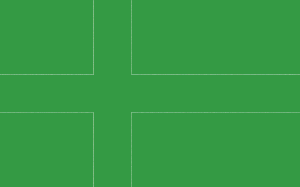
Figure A. The official flag of Ladonia
The flag is a green field with a green cross. The background and the cross have the same colour, which is expressed in sRGB: 0, 144, 0 (#x009000). The flag is 13 by 21 units in height and length, the cross arms 3 units. Horizontal parts is 5 : 3 : 13, vertical 5 : 3 : 5. As is the nature of the Fibonacci numbers, the flag proportion 21:13 is near the Golden Ratio 1.618.
On physical flags, the stitching on the fabric makes the cross discernible. In 2D graphics or on flags that are screen printed (as opposed to sewn or embroidered), the cross can be very difficult to see, so it is acceptable to use a very light white outline around the cross (see Figure A).
Official Coat of Arms of Ladonia
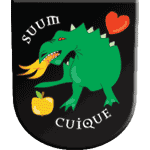 The coat of arms of Ladonia was designed by Vera Porad, the Minister of Graphic Design, in 1996. It is used in the administration and government of the country, appearing on coins, and in official documents and websites. They also appear on the products and goods of Royal warrant holders. The usage of the coats of arms is regulated by Ladonian Law, Act 1997:02, which says that “in commercial activities, the coats of arms, the flag or other official insignia of Ladonia may not be used in a trademark or other insignias for products or services without proper authorization. This includes any mark or text referring to the Ladonian State which might inadvertently (or intentionally without permission) give the commercial mark a sign of official endorsement.”
The original arms of Ladonia do not strictly adhere to established rules of heraldry. The motto is not required to appear on the official Lesser Arms and are often omitted for readability. The official Lesser Arms of Ladonia are officially blazoned:
Sable, a dragon, vert. In 2, a heart, gules; in 3, a pomme, or.
National Anthems
National Language(s)
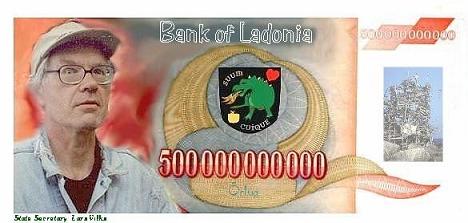
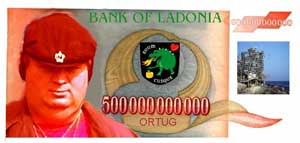
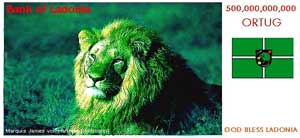
Currency